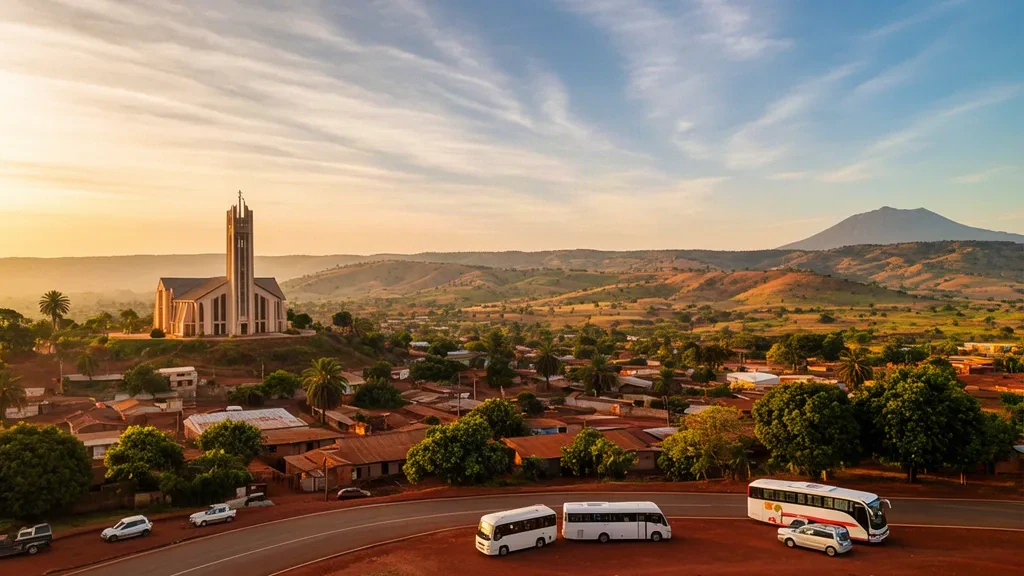
Ngaoundéré
Ngaoundéré, the capital of Cameroon's Adamawa Region, sits on the Adamawa Plateau and serves as a busy crossroads for trade, rail and road travel in the country's north. Its grand market, lamidat palace and mixed cultural heritage give the city a distinct northern Cameroonian character.
Passengers
Luggage
About Adamawa
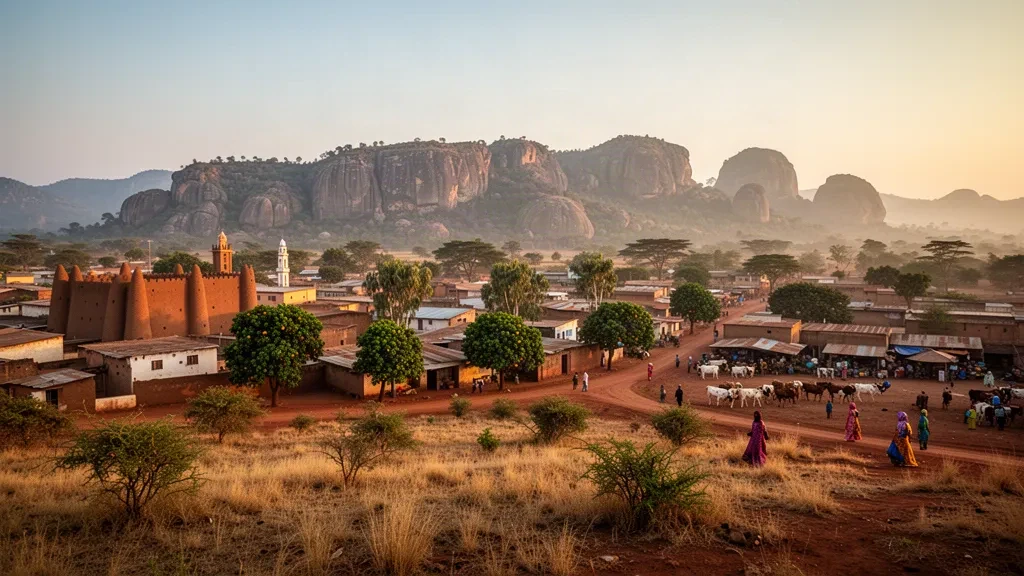
Ngaoundéré is the capital of Cameroon's Adamawa Region, spread across the Adamawa Plateau at roughly 1,100 metres above sea level. It is a gateway city between the forested south and the drier Sahelian north, long known for its Fulani heritage, cattle trade and role as the northern terminus of the Trans-Cameroon railway.
The city was founded around 1835 by the Fulani leader Ardo Njobdi and grew within the Adamawa emirate. Its most important landmark is the Lamidat, the palace of the Lamido, a working traditional seat of authority set on a hill with the Grand Mosque nearby, while the Ngaoundéré Museum preserves Fulani and local artefacts.
Around the old city, neighbourhoods such as the commercial and administrative districts and the popular Ndelbé quarter give Ngaoundéré a mix of traditional compounds, market streets and university life. Visitors head to the central market, Mount Ngaoundéré, Lake Tizon and nearby sights such as the cliff of Mbé and the falls at Mbang Mbourn.
As a regional economic and university centre, Ngaoundéré serves the cattle, agriculture and transport economy of the Adamawa Region. The Université de Ngaoundéré adds a student presence, while the railway, airport and road links make the city a practical stopover and base for exploring the plateau and northern Cameroon.
Leisure travellers come for the traditional Fulani culture, landscapes and highland climate, while business and trade visitors value the city's markets, institutions and transport connections. Ngaoundéré offers a distinctive introduction to northern Cameroon away from the larger southern cities.
Adamawa Travel Guide
Best Time to Visit
The dry season from November to February is the most comfortable time to visit Ngaoundéré, with cooler highland weather and easier travel on unpaved roads. The rainy season from roughly May to October brings green landscapes but heavier showers and muddier routes.
How to Get Around
Within Ngaoundéré, motorcycle taxis and shared taxis are the main ways to move between the market, station, university and outlying quarters. The central area is walkable, and the railway links Ngaoundéré southward to Yaoundé.
Where to Stay
The city centre and the area around the market and station offer the most convenient hotels and guesthouses. Quieter options and some larger hotels are found on the plateau near the administrative districts, within reach of the Lamidat and the airport road.
Food & Drink
Local eating centres on grilled beef, millet and maize-based dishes, and Fulani-influenced stews, often found at markets and roadside grills known for soya. Central markets and simple restaurants around the city offer inexpensive local and Cameroonian meals.
Ground Transportation Services in Adamawa
Airport Transfers
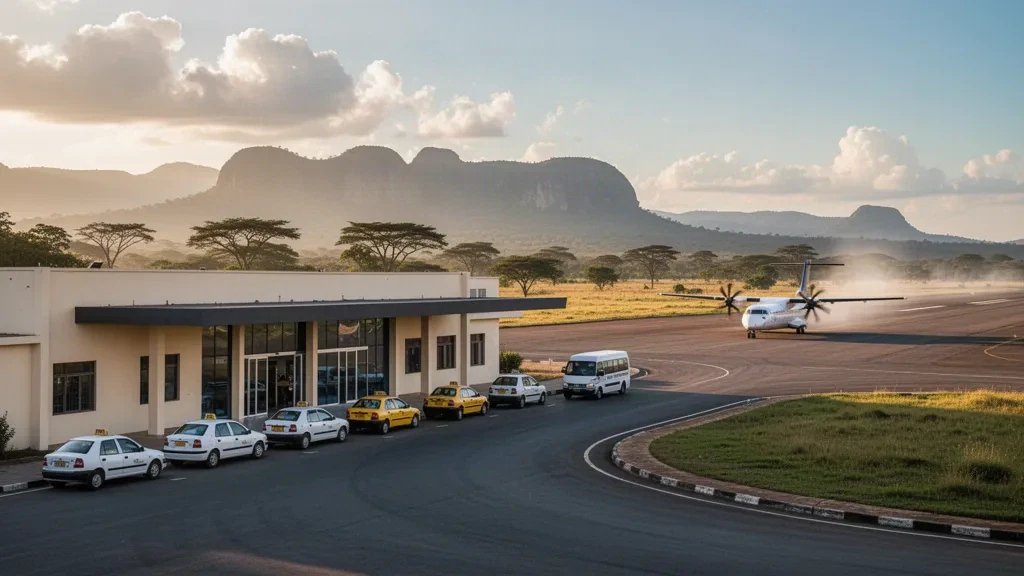
Travel between Ngaoundéré Airport and hotels, the city centre, the university district and other destinations in and around Ngaoundéré.
Hourly Chauffeur
Book a private driver by the hour for business visits, market and landmark trips, events and flexible travel around Ngaoundéré and the surrounding plateau.
Car Rental
Rent a vehicle in Ngaoundéré for independent travel around the city and day trips to nearby sights such as Lake Tizon, the Mbé cliff or Mbang Mbourn falls.
Bus & Group Transfers
Arrange minibuses or charter buses for groups, university and corporate travel, events, airport pickups and excursions in and around Ngaoundéré.
Frequently Asked Questions
Related Cities in Cameroon
View all
Bafoussam
Bafoussam, the capital of Cameroon's West Region, is a highland city known for its vibrant markets, traditional chief's palace and surrounding coffee and farming landscapes.
Buea
Buea, the capital of Cameroon's Southwest Region, sits at the foot of Mount Cameroon and blends colonial history, lively markets, and a university-town energy.
Cameroon South
Cameroon South runs from the Atlantic beaches at Kribi into dense equatorial rainforest, where Beti-Pahuin towns, cocoa and timber routes and the Campo Ma'an reserve set a slow, humid rhythm. It is a region of red-earth roads, roadside grilled fish and forest mornings that begin under thick mist.