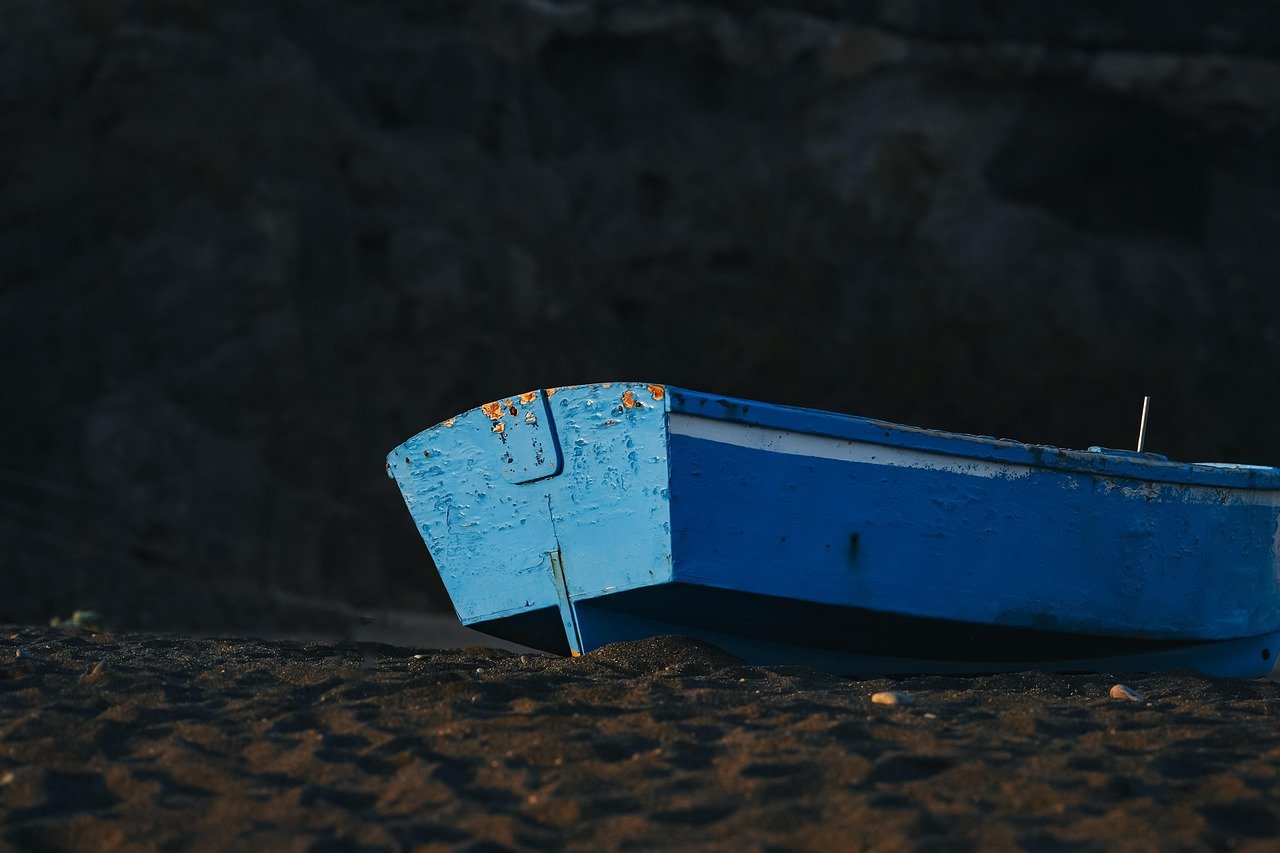
Dakhlet Nouadhibou
Dakhlet Nouadhibou, a coastal region in northern Mauritania, is known for its Atlantic shoreline, busy port and links to the Sahara.
Passengers
Luggage
About Dakhlet Nouadhibou
Nouadhibou is Mauritania's second-largest city and its principal northern seaport, set on the Ras Nouadhibou peninsula where the Atlantic meets the Sahara. Formerly known as Port-Étienne, the city blends a working maritime and industrial character with the stark coastal landscape of Cap Blanc and nearby desert routes.
Founded in 1906 as a French fishing station, Nouadhibou grew around its deep-water port and later the iron ore industry. The old French coastal gun emplacements, the Point Central lighthouse and the Cap Blanc satellite reserve, where endangered Mediterranean monk seals can sometimes be seen, reflect the city's layered colonial and natural history.
Keran forms the busy city centre with banks, shops and restaurants, while Cansado is a planned company town built for SNIM mine workers in the 1960s and Numerowat is a growing residential area. The lively Port Artisanal fishing harbour, with its colourful pirogues, and the rusting ship graveyard west of the commercial port are among the city's most distinctive sights.
Nouadhibou is a major economic hub for Mauritania. The SNIM iron ore trains, among the longest in the world, carry ore from Zouérat and Fdérik to the mineral terminal, while fishing, fish processing and the Nouadhibou Free Zone support trade and investment around the Port Autonome.
For travellers, Nouadhibou works both as a business destination linked to mining, fishing and logistics, and as a gateway for coastal nature trips, Cap Blanc and Banc d'Arguin, offering a raw, windswept Atlantic-Saharan setting unlike Mauritania's inland cities.
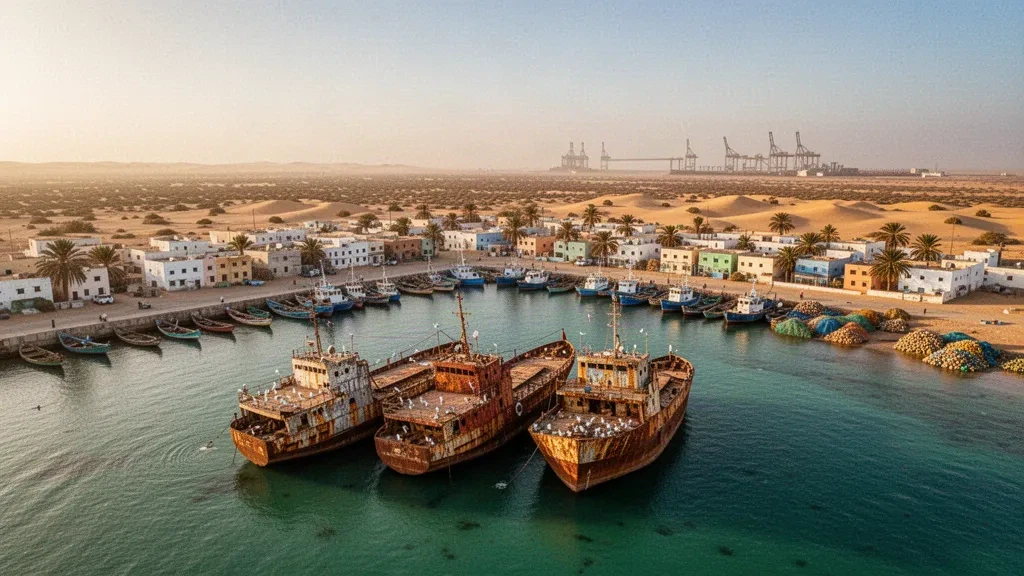
Dakhlet Nouadhibou Travel Guide
Best Time to Visit
November to March is the most comfortable period, with milder temperatures and Atlantic breezes. Summer months can be extremely hot, while winter is better for fishing excursions, coastal sightseeing and desert trips.
How to Get Around
Shared taxis and private taxis serve the main districts, and central Keran can be explored on foot. Four-wheel-drive vehicles are useful for coastal and desert routes, and private transfers help travellers move between the airport, port and hotels.
Where to Stay
Keran is convenient for banks, restaurants and city services, while Cansado offers a quieter, more residential atmosphere. Accommodation is limited overall, with small hotels and guesthouses concentrated around the centre and the seafront.
Food & Drink
Fresh seafood dominates local menus, from grilled fish and octopus at the Port Artisanal to fish-and-rice dishes such as thieboudienne. Mauritanian mint tea is served throughout the day, and simple restaurants and cafés cluster in Keran.
Ground Transportation Services in Dakhlet Nouadhibou
Airport Transfers
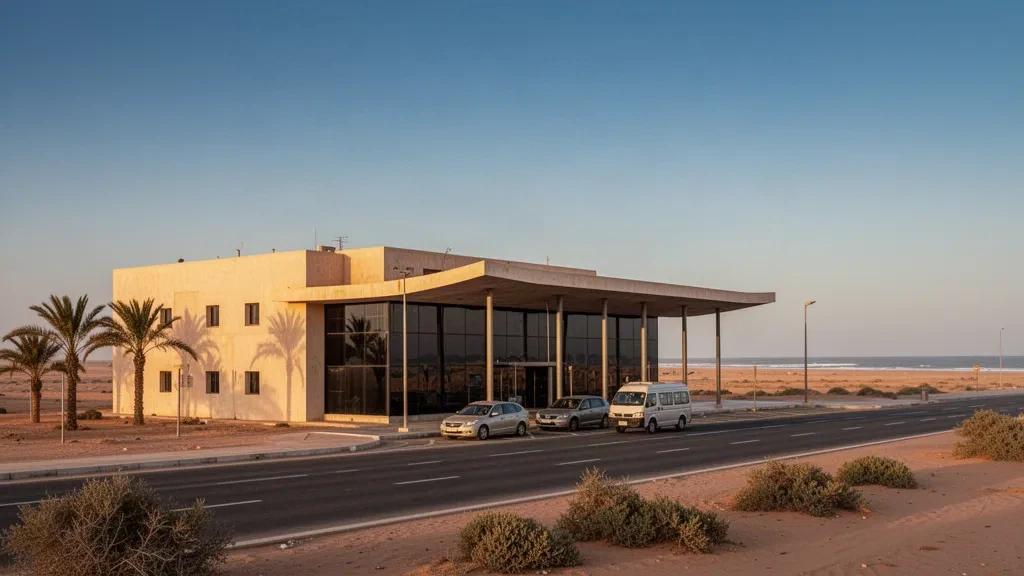
Travel between Nouadhibou International Airport and hotels, the city centre, Port Autonome and other destinations around Nouadhibou with a pre-booked vehicle.
Hourly Chauffeur
Book a private chauffeur by the hour for port and industrial visits, business meetings, city sightseeing and flexible travel along the Nouadhibou peninsula.
Car Rental
Rent a car or 4x4 in Nouadhibou for independent travel around the city and along coastal and desert routes toward Cap Blanc and the surrounding region.
Bus & Group Transfers
Arrange minibuses or charter buses for groups, corporate travel, fishing and mining sector visits, events and airport transfers in Nouadhibou.
Frequently Asked Questions
Related Cities in Mauritania
View all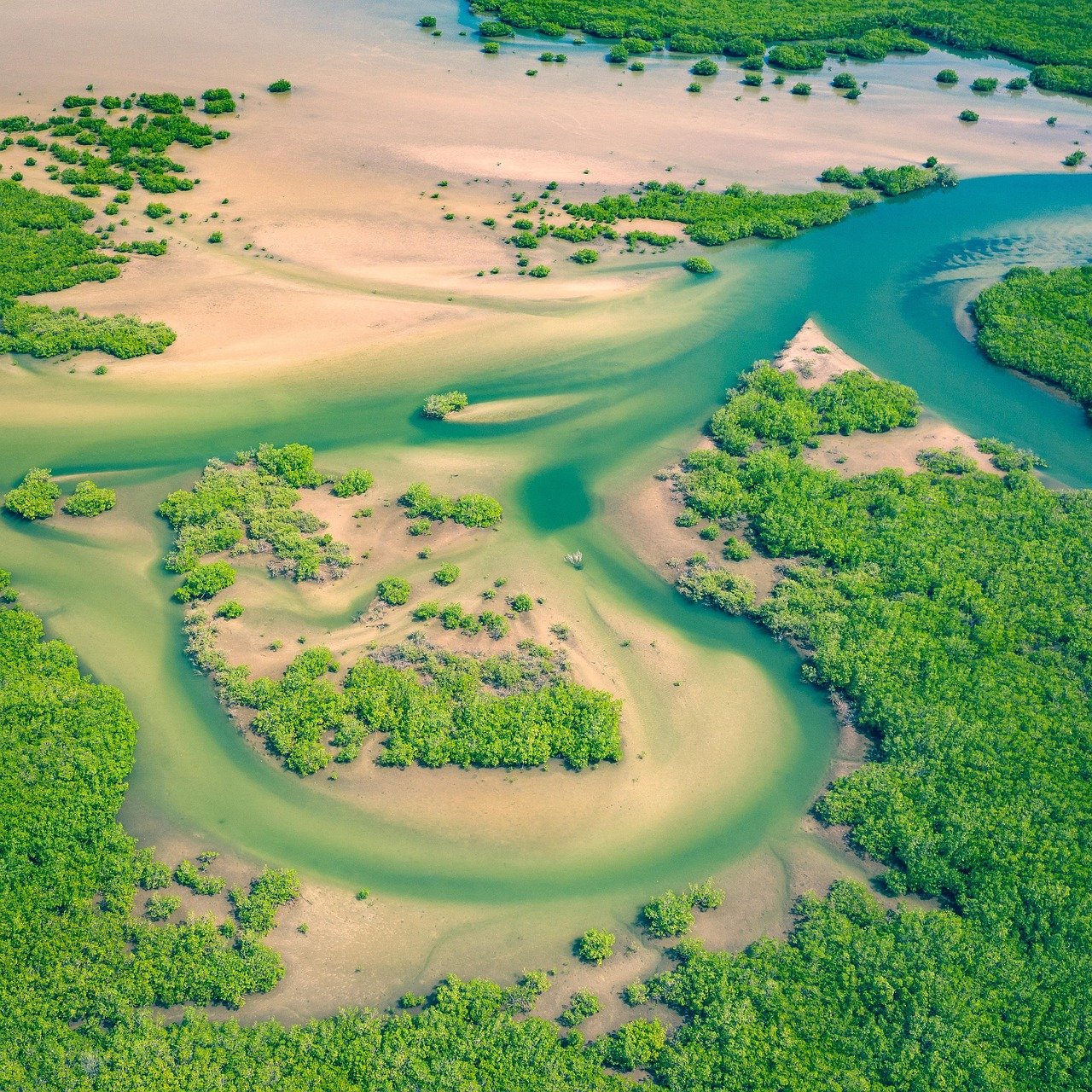
Rosso
Rosso, the capital of Mauritania's Trarza region, lies on the Senegal River and blends a lively port and market atmosphere with riverside views and easy access to the country's south.
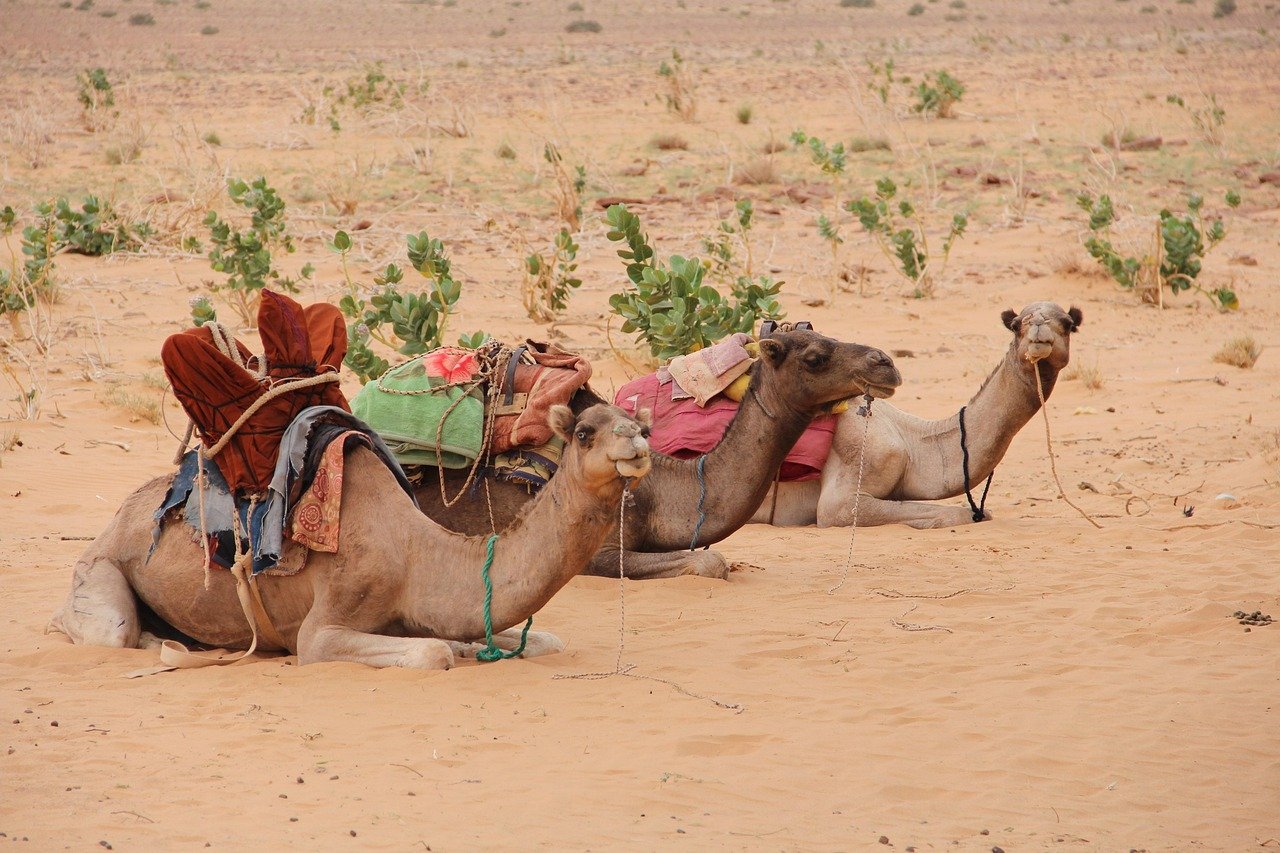
Zouérat
Zouérat is a remote Saharan mining city in northern Mauritania and the capital of the Tiris Zemmour region. Built around the iron-ore industry, it has a practical, frontier character and serves as a base for exploring the surrounding desert.
Tagant
Tagant, a historic town in Mauritania, is known for its palm groves, ancient caravan routes and traditional Mauritanian culture. Its quiet desert setting and warm hospitality offer a distinctive travel experience.