Boké
Boké, capital of its namesake region in western Guinea, is a lively commercial and cultural hub where bustling markets and nearby bauxite deposits shape local life.
Passengers
Luggage
About Boké
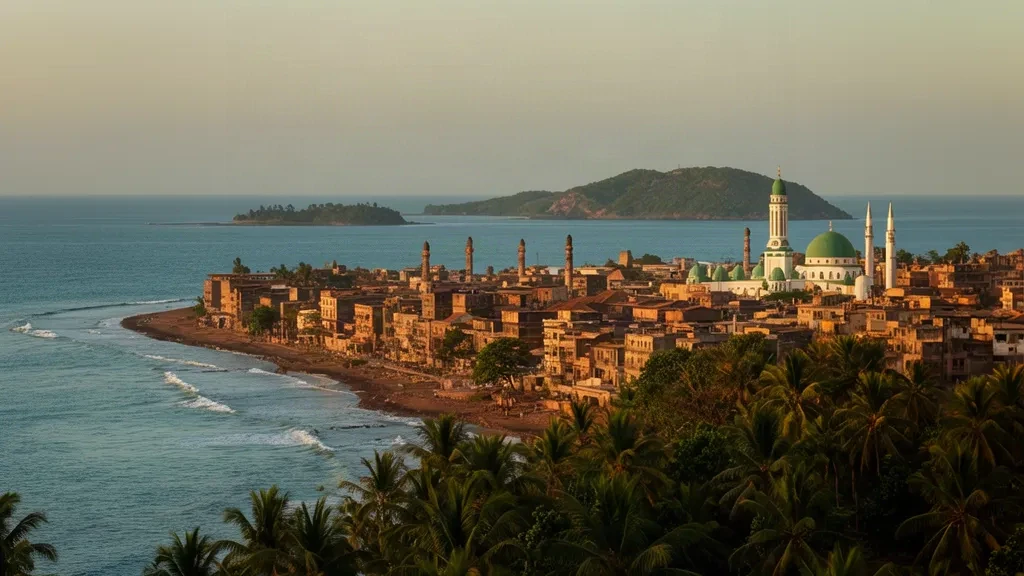
Boké is a port city in northwestern Guinea, set on the banks of the Rio Nunez in Lower Guinea near the border with Guinea-Bissau. It is the capital of both Boké Prefecture and Boké Region, and its position between the coast and the bauxite-rich interior has made it an administrative and commercial centre.
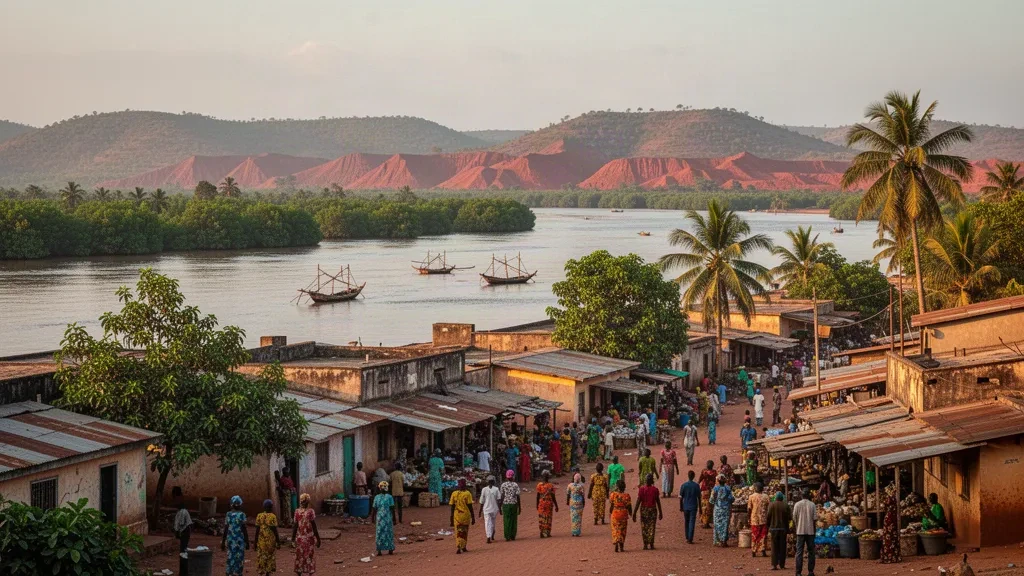
The town's most important historic site is the Fortin de Boké, a small fort that once played a role in the regional slave trade and now houses a museum. Alongside this colonial-era landmark, the Rio Nunez waterfront, the central market and the surrounding villages reflect a long trading tradition and a mix of local communities, including Nalu, Landuma, Baga, Susu and Fula populations.
Boké is closely tied to Guinea's bauxite industry. While the large mining operations are located around nearby Kamsar and Sangarédi, connected by road and the regional railway, Boké itself remains a base for commerce, services and workers linked to the sector. Agriculture also remains important, with rice, maize, peanuts, fonio and cashew grown in the area, and the market is known for supplying peanuts to other parts of the country.
For travellers, Boké offers a quieter, working picture of Guinea beyond the capital. Visitors come to see the fort museum, observe life along the Rio Nunez and use the town as a stopover between Conakry, roughly 250 km away by road, and the mining and coastal districts to the west and north. Accommodation and facilities are limited, so planning ahead is useful.
Business travellers are drawn by mining, port and trade activity, while independent visitors interested in history and river landscapes find a modest but distinctive destination. Together, these roles make Boké a practical gateway to one of Guinea's most economically significant regions.
Boké Travel Guide
Best Time to Visit
The dry season from November to April is the most comfortable time to visit Boké, with less rain and more reliable road travel. Heavy rainfall from June to October can make some routes and outdoor plans more difficult.
How to Get Around
Boké is small enough to explore parts of the centre on foot, while shared taxis and motorcycle taxis handle most local journeys. For trips to nearby Kamsar, Sangarédi or Conakry, shared vehicles and private drivers are the practical options.
Where to Stay
Accommodation in Boké is limited, with a small number of hotels and guesthouses mainly near the town centre. Business travellers linked to mining and port activity often base themselves in the central area or in nearby Kamsar.
Food & Drink
Meals in Boké typically centre on rice with sauces, grilled fish, peanuts, maize and fonio. The central market is known for its peanuts, and small restaurants and roadside stalls serve everyday Guinean dishes.
Ground Transportation Services in Boké
Airport Transfers
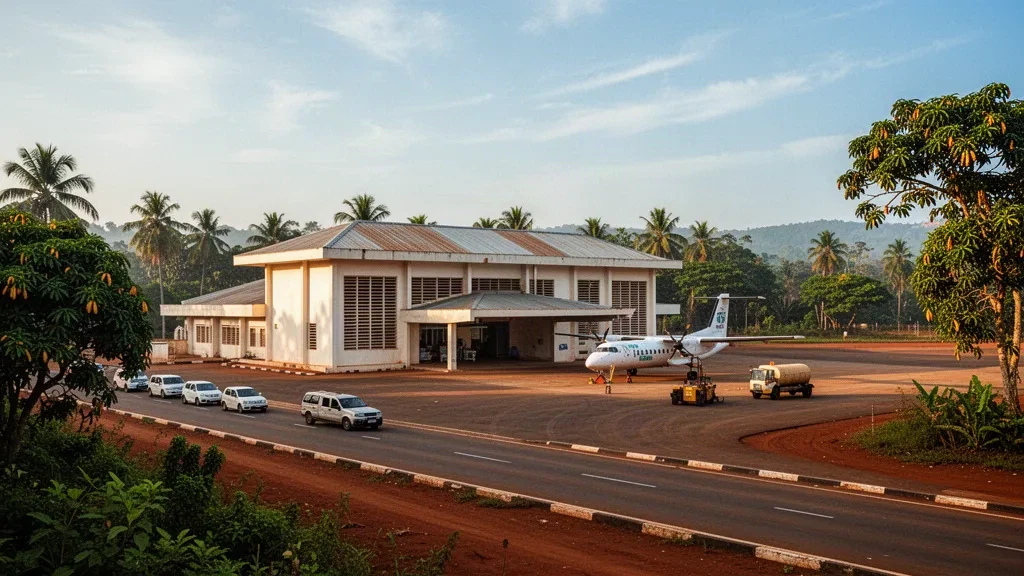
Travel between Boké Baralande Airport and hotels, the town centre, business sites and nearby destinations such as Kamsar.
Hourly Chauffeur
Book a private chauffeur by the hour for business meetings, mine and port visits, sightseeing and flexible travel around Boké.
Car Rental
Rent a car in Boké for independent travel around the town and journeys to nearby mining, port and coastal destinations.
Bus & Group Transfers
Arrange minibuses or charter buses for groups, corporate travel, events, airport transfers and tours in and around Boké.
Frequently Asked Questions
Related Cities in Guinea
View all
Yomou
Yomou is a lively town in southeastern Guinea, set in the Forest Guinea region and shaped by local markets, diverse cultural traditions and the green landscapes that surround it.
Tougué
Tougué is a highland town in Guinea's Fouta Djallon region, with a local market, surrounding plateaus and a strong Fulani cultural heritage.

Télimélé
Télimélé, a town in Guinea's Fouta Djallon highlands, is a local market and administrative centre. Its rural setting and surrounding hills give it a quiet, authentic character.