Tougué
Tougué is a highland town in Guinea's Fouta Djallon region, with a local market, surrounding plateaus and a strong Fulani cultural heritage.
Passengers
Luggage
About Tougué
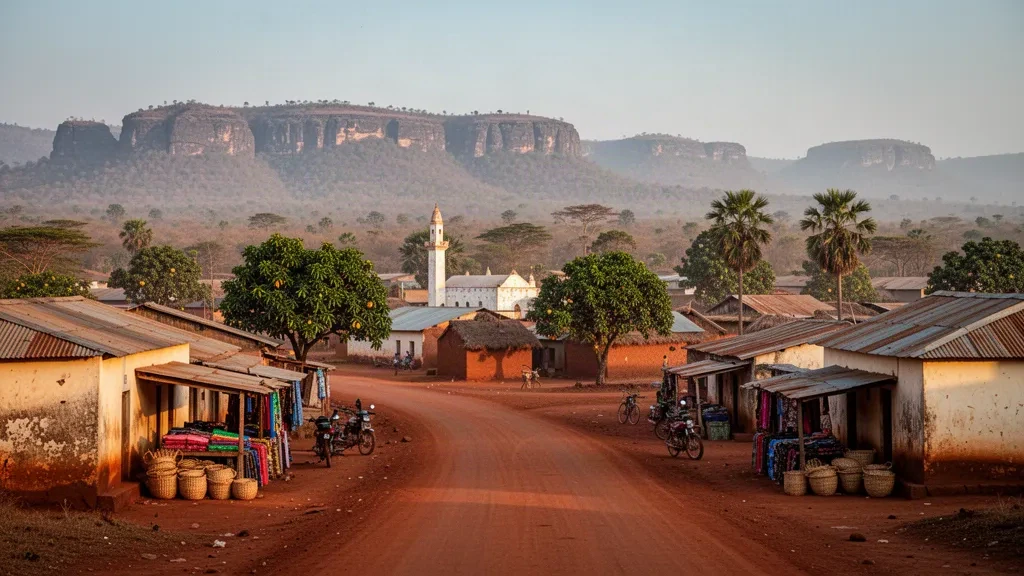
Tougué is a small market town and prefecture capital in the Fouta Djallon highlands of north-central Guinea, about 85 km from Labé. It sits on a savanna plateau at roughly 817 m and serves as a trading centre for rice, millet, oranges, cattle and goats among the region's predominantly Fulani (Peul) population.
The town's name is said to come from the Djallonké word 'touguen', meaning a place favoured by bats. Tougué corresponds approximately to the former diwal of Koïn, one of the nine provinces of the Muslim Fouta Djallon kingdom, and was established as a colonial administrative post in the early 1900s.
The surrounding landscape is defined by wooded savanna, laterite plateaus and the headwaters of the Bafing, Falémé and Gambie river systems. Local natural attractions include the waterfalls of Gountou-Ba, Bagata and Tele, the Ganfata cave and Lake Domas, while the town itself remains modest, with a small market and neighbourhoods built around the prefecture centre.
Agriculture and livestock are the backbone of the local economy, with farmers growing rice, fonio, millet, maize, groundnuts, potatoes, oranges and market vegetables. The area also holds unexploited bauxite deposits, and the Koukoutamba dam project on the Bafing River is bringing new activity to the prefecture.
For travellers, Tougué is an off-the-beaten-path base for exploring Fouta Djallon culture and scenery, including pastoral landscapes, traditional pottery and weaving, and nearby highland villages. Business visitors come mainly for agro-pastoral, mining and hydropower-related work, and should plan for simple infrastructure and rough rural roads.
Tougué Travel Guide
Best Time to Visit
The dry season from November to April is the most practical time to visit Tougué, when roads are easier and temperatures are warm. The rainy season from May to October brings lush scenery but can make unpaved tracks difficult, with the harmattan wind often arriving between December and January.
How to Get Around
Tougué is small enough to explore on foot, while motorcycle taxis handle short trips around town. Shared bush taxis and minibuses run the 85 km route from Labé, though the journey can take around four hours, and a 4x4 is useful during the rainy season.
Where to Stay
Accommodation in Tougué is limited to simple guesthouses and small lodgings, often near the market or prefecture centre. Labé, about 85 km away, offers more hotels and services, making it a common overnight stop for visitors arriving from the regional capital.
Food & Drink
Meals reflect Fulani and Fouta Djallon traditions, built around rice, fonio and millet with peanut or leaf sauces, grilled meat, dairy and seasonal oranges. Local markets supply fresh produce, and small cafés and guesthouse kitchens provide the main dining options in town.
Ground Transportation Services in Tougué
Airport Transfers
Arrange road transfers between Labé Airport (LEK) and Tougué, covering the roughly 85 km route to hotels, project sites and meeting points across the prefecture.
Hourly Chauffeur
Book a private chauffeur by the hour for flexible travel to waterfalls, caves, villages and business meetings around Tougué and the Fouta Djallon.
Car Rental
Rent a 4x4 in Labé or Conakry for independent travel on unpaved roads around Tougué, with a local driver recommended for remote tracks.
Bus & Group Transfers
Organise minibuses or 4x4 convoys for groups, agro-pastoral and hydropower project teams, events and transfers between Labé and Tougué.
Frequently Asked Questions
Related Cities in Guinea
View all
Yomou
Yomou is a lively town in southeastern Guinea, set in the Forest Guinea region and shaped by local markets, diverse cultural traditions and the green landscapes that surround it.

Télimélé
Télimélé, a town in Guinea's Fouta Djallon highlands, is a local market and administrative centre. Its rural setting and surrounding hills give it a quiet, authentic character.

Siguiri
Siguiri is a historic gold-mining town on the Niger River in northeastern Guinea, where a bustling market and riverside setting reflect its role as a regional trading hub near the Mali border.