Umatac
Umatac, also known as Humåtak, is a historic village on Guam's southern coast, known for its Spanish-era fort, colonial church and sweeping bay where Ferdinand Magellan's expedition landed in 1521. Its quiet streets and coastal scenery make it a memorable stop for travelers exploring the island's heritage.
Passengers
Luggage
About Umatac (Humåtak)
Humåtak, commonly known as Umatac, is a small historic village on Guam's southwestern coast, set around the sheltered curve of Umatac Bay. As the island's least populated municipality, it offers a quiet contrast to Guam's busier resort areas, with steep green hills, coastal views and deep ties to Chamorro tradition.
Umatac is best known for its place in Pacific exploration. Local oral tradition identifies the bay as the site where Ferdinand Magellan's expedition first landed on Guam in 1521, and Miguel López de Legazpi anchored here in 1565 to formally claim the island for Spain. During the Spanish colonial period, Umatac served as an important port of call for the Manila galleons.
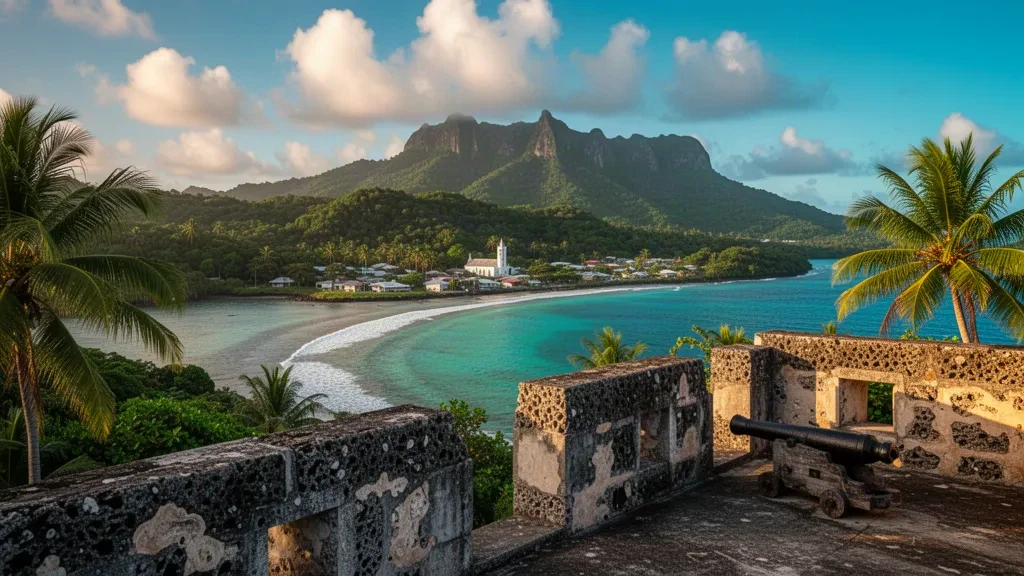
Spanish-era history remains visible throughout the village. Fort Nuestra Señora de la Soledad, often called Fort Soledad, stands on a hill above the bay, while the ruins of Fort San Jose, the old San Dionisio church site and other structures recall the colonial past. The current San Dionisio Church, built in 1939, sits along the village road.
Umatac also holds deep meaning in Chamorro culture. Fouha Bay is home to Fouha Rock, known as Creation Point, which ancient Chamorros believed was the resting place of the goddess Fu'una. A Magellan monument stands near the center of the bay, and the village marks Discovery Day each March 21 with a re-enactment of the 1521 landing.
For travelers, Umatac is best experienced as a scenic and historical stop on a southern Guam route. Visitors come for the fort views, the bay, surfing, the Cetti Bay overlook and the unhurried atmosphere, often combining the village with nearby southern sites. It appeals most to independent explorers interested in Guam's layered history and slower pace.
Umatac (Humåtak) Travel Guide
Best Time to Visit
Guam's drier months from January through June are generally best for exploring Umatac's open-air forts and bay views. Discovery Day on March 21 adds a cultural event, while the wetter second half of the year brings greener hills and occasional heavy showers.
How to Get Around
Umatac is best reached by rental car, since scheduled public transport is limited in southern Guam and the village's sights are spread along hills and the bay. Many visitors drive the southern coastal loop, stopping at Fort Soledad, Umatac Bay and the Cetti Bay overlook.
Where to Stay
Umatac itself has very few accommodation options, so most visitors stay in Tumon, Hagåtña or other central Guam areas and visit as a day trip. The village suits travelers who prefer a short stop over an overnight stay.
Food & Drink
Umatac has a small number of local stores rather than a developed restaurant scene. Visitors can find Chamorro barbecue and fiesta plates at community events, or stop at cafés and restaurants in nearby southern villages such as Agat and Merizo.
Ground Transportation Services in Umatac (Humåtak)
Airport Transfers
Travel between Antonio B. Won Pat International Airport and Umatac with a private transfer for a direct ride to this southern Guam village.
Hourly Chauffeur
Book a private chauffeur by the hour for flexible sightseeing around Umatac and southern Guam, including Fort Soledad, Umatac Bay and nearby overlooks.
Car Rental
Rent a car to explore Umatac and Guam's scenic southern coast independently, with easy stops at historic and natural sites.
Bus & Group Transfers
Arrange minibuses or charter buses for group visits, fiestas, cultural events and tours around Umatac and other southern Guam villages.
Frequently Asked Questions
Related Cities in Guam
View all
Yona
Yona, a village in Guam, combines a peaceful residential feel with easy access to the island's natural landscapes and nearby attractions.
Yigo
Yigo is Guam's northernmost village, where Chamorro traditions, rural neighborhoods and lush limestone forests meet the island's rugged northern coast. It is a quiet base for exploring landmarks like Ritidian Point and experiencing local fiestas.

Tamuning
Tamuning, Guam's commercial hub, blends resort hotels, duty-free shopping and beachfront recreation with a lively dining and nightlife scene.