Catanduanes
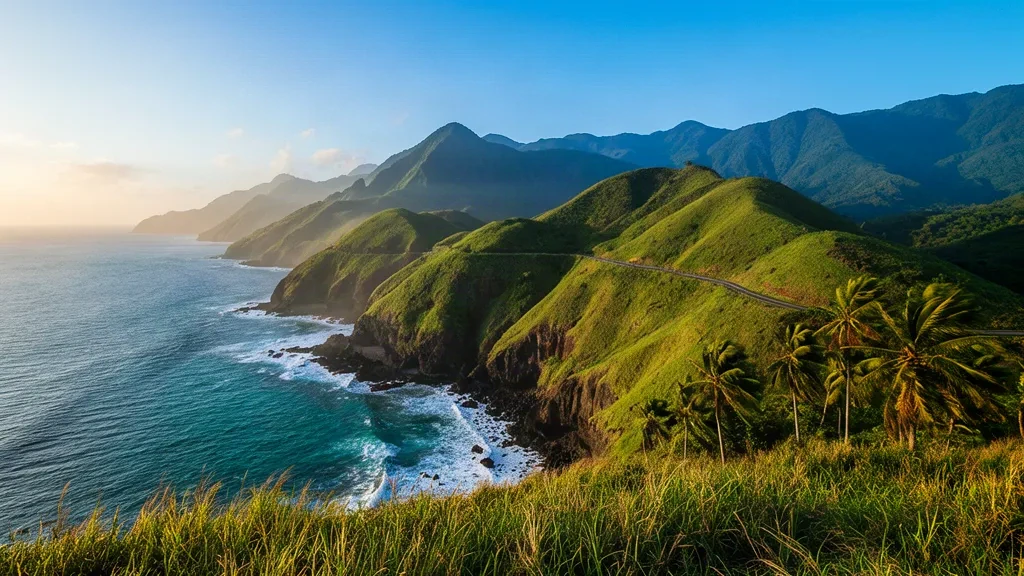
Catanduanes blends rugged Pacific coastline, surf breaks, lush hills and quiet coastal towns with a relaxed, unspoiled island atmosphere.
Passengers
Luggage
About Catanduanes
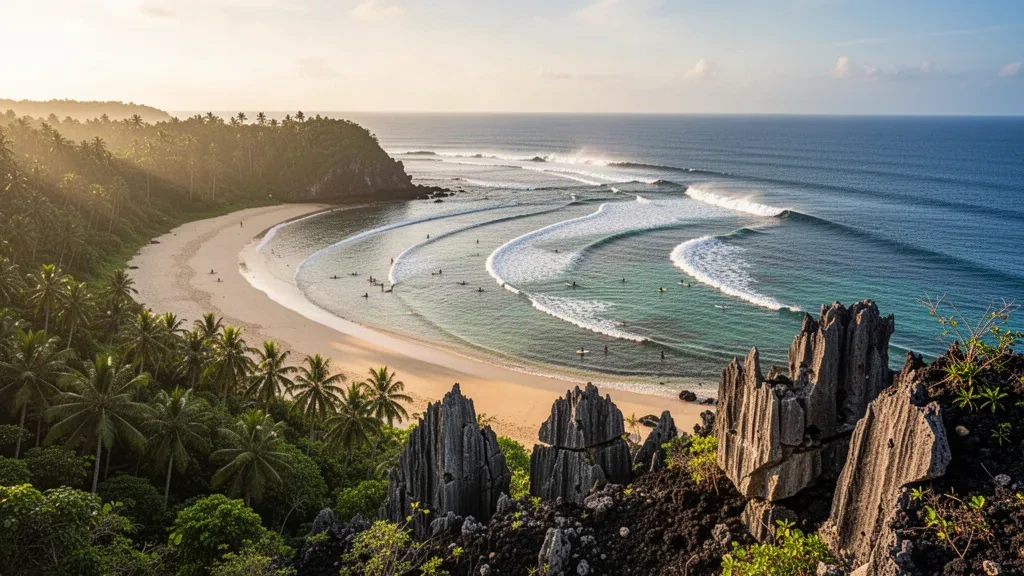
Catanduanes is an island province in the Bicol Region of the Philippines, often called the Happy Island for its relaxed pace and welcoming communities. It faces the Pacific Ocean east of mainland Luzon and is known for rugged cliffs, quiet beaches, waterfalls and dependable surf, particularly around Baras.
Virac, the provincial capital, anchors daily life with its port, airport, markets and churches. Historic landmarks include the nearly two-century-old St. John the Baptist Church in Bato and Virac Cathedral, while destinations such as Maribina Falls and Binurong Point reveal the island's coastal and volcanic scenery.
Travellers spread out across a handful of coastal municipalities. Baras is the best-known outdoor base for Puraran Beach and the Majestic Wave surf break, as well as the cliff viewpoints of Binurong Point. Bato offers heritage and roadside waterfalls, while San Andres, Viga and Gigmoto hold quieter shorelines and fishing villages.
Abaca, the fibre used for Manila hemp, has long shaped the local economy along with farming and fishing. Local food leans Bicolano, with coconut-rich dishes, fresh seafood and spiced stews served in simple eateries and markets around Virac and the coastal towns. The Catandungan Festival in Virac adds a colourful window into island culture.
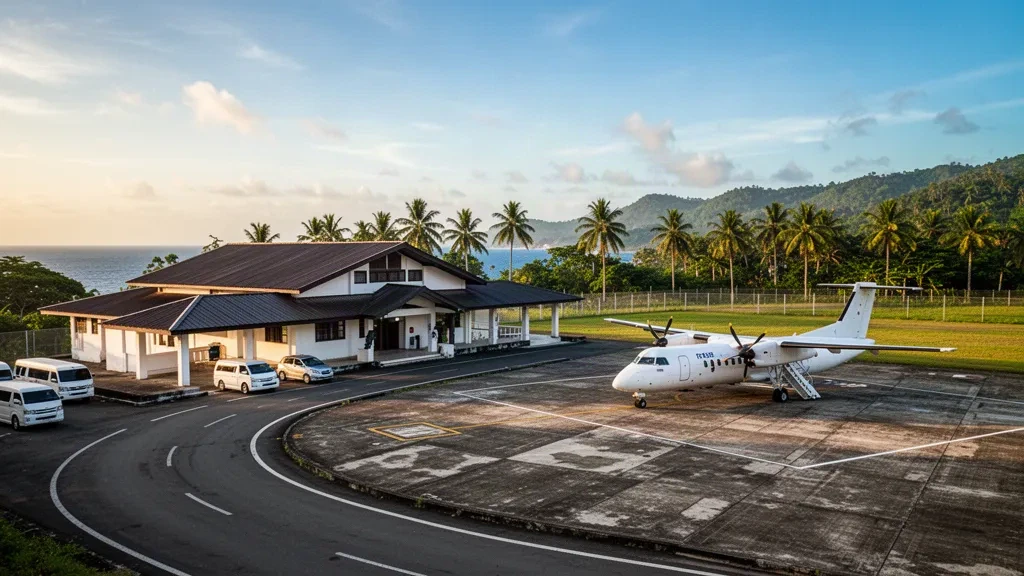
Leisure travellers come for nature, surfing and slow coastal exploration, while business visitors pass through mainly for agriculture, trade and local government work. The island's small airport and ferry links keep it accessible, and its uncrowded character sets it apart from busier Philippine resort destinations.
Catanduanes Travel Guide
Best Time to Visit
Catanduanes is generally driest and calmest from March to May, when the sea is smoother for beaches and island-hopping. Surfers often prefer the September-to-November swell season at Puraran, while the late-year typhoon months can disrupt travel, so flexible planning is wise.
How to Get Around
Getting around Catanduanes usually combines tricycles for short trips in Virac and coastal towns with jeepneys, vans and habal-habal motorcycles for travel between municipalities. Renting a car or motorcycle in Virac gives more flexibility for reaching Binurong Point, Puraran Beach and other scenic spots.
Where to Stay
Virac has the widest choice of hotels, inns and guesthouses, and is a practical base near the airport and port. Baras offers surf camps and beachfront lodges close to Puraran, while San Andres and other coastal municipalities have simpler resorts for quieter stays.
Food & Drink
Catanduanes serves Bicolano food built around coconut milk, chilli and fresh Pacific seafood, with dishes such as laing and Bicol express widely available. Virac's markets and eateries are the main dining hub, while coastal towns offer simple seafood meals and local coffee spots.
Ground Transportation Services in Catanduanes
Airport Transfers
Travel between Virac Airport and hotels, guesthouses and destinations across Virac and coastal Catanduanes municipalities with private airport transfer services.
Hourly Chauffeur
Book a private chauffeur by the hour for flexible travel around Virac and Catanduanes, including sightseeing at Binurong Point, Puraran Beach and Maribina Falls.
Car Rental
Rent a car or van in Virac for independent travel around Catanduanes and convenient access to beaches, viewpoints and towns beyond the capital.
Bus & Group Transfers
Arrange minibuses or charter buses for group tours, events, ferry and airport transfers, and travel between Catanduanes municipalities.
Frequently Asked Questions
Related Cities in Philippines
View all
Biliran
Biliran is a laid-back coastal municipality on Biliran Island, where historic church landmarks sit close to waterfalls, hot springs and views of Mount Biliran.

Antique
Antique, on the island of Panay in the Philippines, is known for its heritage towns, old churches, coastal villages and the rugged interior of Mount Madja-as.
Zamboanga Sibugay
Zamboanga Sibugay, a coastal province on the Zamboanga Peninsula, is known for its rice fields, fishing villages and the lively capital town of Ipil.