Timbuktu
Timbuktu, a historic Saharan city in Mali, is known for its mud-brick mosques, ancient manuscripts and enduring role as a crossroads of trade and learning.
Passengers
Luggage
About Tombouctou
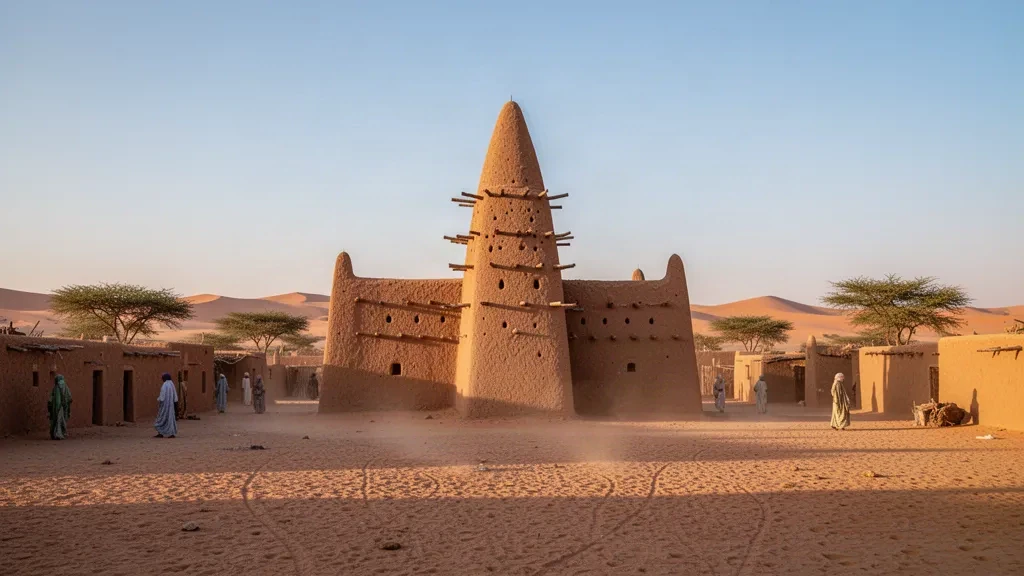
Timbuktu, also written Tombouctou, is a historic oasis city in northern Mali on the southern edge of the Sahara, about 15 km north of the Niger River. Famous for centuries as a desert crossroads of trade and learning, it remains a compact town of mud-brick houses, sandy streets and landmark mosques that draw travellers for its remarkable history.
The city's golden age lasted from roughly the 13th to the 16th century, when trans-Saharan caravans exchanged salt, gold, cloth and manuscripts and Timbuktu became one of West Africa's great centres of Islamic scholarship. The Djinguereber, Sankore and Sidi Yahia mosques, together with the old town, form a UNESCO World Heritage Site, and the Ahmed Baba Institute preserves many of the city's celebrated manuscripts.
The old medina is divided into quarters such as Djinguereber, Sankore, Badjindé and Sareikeina, where narrow lanes lead past workshops, small squares and markets. Beyond the centre, the riverside ports of Kabara and Korioumé connect the city with the Niger, while surrounding dunes offer camel treks, Tuareg camps and desert excursions.
Today Timbuktu serves as a regional administrative and trading centre for northern Mali, with livestock, salt, crafts and limited tourism among its main activities. Local food centres on rice and millet, grilled river fish and Tuareg flatbread, often shared over rounds of sweet green tea.
For travellers, Timbuktu offers a rare encounter with West African history and Saharan culture, while researchers, heritage specialists and visiting delegations value it as a centre of scholarship and conservation. Journeys require careful planning, local guidance and close attention to current security conditions.
Tombouctou Travel Guide
Best Time to Visit
The most comfortable months are November to February, when daytime temperatures are lower and desert trips are more manageable. From March to June the heat can be extreme, while the brief rainy season falls mainly between July and September. Travellers should also check current security advice before planning a visit.
How to Get Around
Timbuktu's old town is compact and easy to explore on foot, with taxis, moto-taxis and donkey carts used for shorter journeys. For the Niger river ports, desert outskirts and surrounding sites, 4x4 vehicles and arranged transfers are the usual options, while pinasses travel along the river.
Where to Stay
Accommodation is limited and mostly consists of small hotels, auberges and guesthouses in or near the centre, often within walking distance of the main mosques and market. Travellers should book ahead, as options can be basic and availability varies.
Food & Drink
Local eating centres on rice and millet dishes, grilled fish from the Niger, Tuareg flatbread and spiced sauces, often finished with sweet green tea. Small restaurants, street stalls and the central market offer the most everyday dining choices in town.
Ground Transportation Services in Tombouctou
Airport Transfers
Book a vehicle between Timbuktu Airport (TOM) and guesthouses, hotels, the old town or the Niger river ports of Kabara and Korioumé.
Hourly Chauffeur
Hire a private driver by the hour for mosque visits, manuscript libraries, desert excursions, meetings and flexible travel around Timbuktu.
Car Rental
Rent a 4x4 in Timbuktu for independent journeys to the river ports, surrounding desert sites and longer trips across northern Mali, where roads can be rough and sandy.
Bus & Group Transfers
Arrange minibuses or charter vehicles for groups travelling to Timbuktu, airport pick-ups, events, cultural tours and journeys between the town and other Malian destinations.

Frequently Asked Questions
Related Cities in Mali
View all
Taoudénit
Taoudénit is a remote Saharan town in northern Mali, known for its historic salt mines and centuries-old caravan trade routes that once linked the desert to the wider region.
Sikasso
Sikasso, in southern Mali, is a lively regional hub known for its Senufo and Bambara heritage, colourful markets, and the historic Tata fortress.

Ségou
Ségou, a historic city on the Niger River in Mali, was once the capital of the Bambara Empire and remains known for its riverside setting, markets, pottery, colorful architecture and lively cultural festivals.