Basse-Terre
Basse-Terre, the historic capital of Guadeloupe, blends colonial architecture and Creole culture with the lush slopes of La Soufrière and a relaxed Caribbean waterfront.
Passengers
Luggage
About Basse-Terre
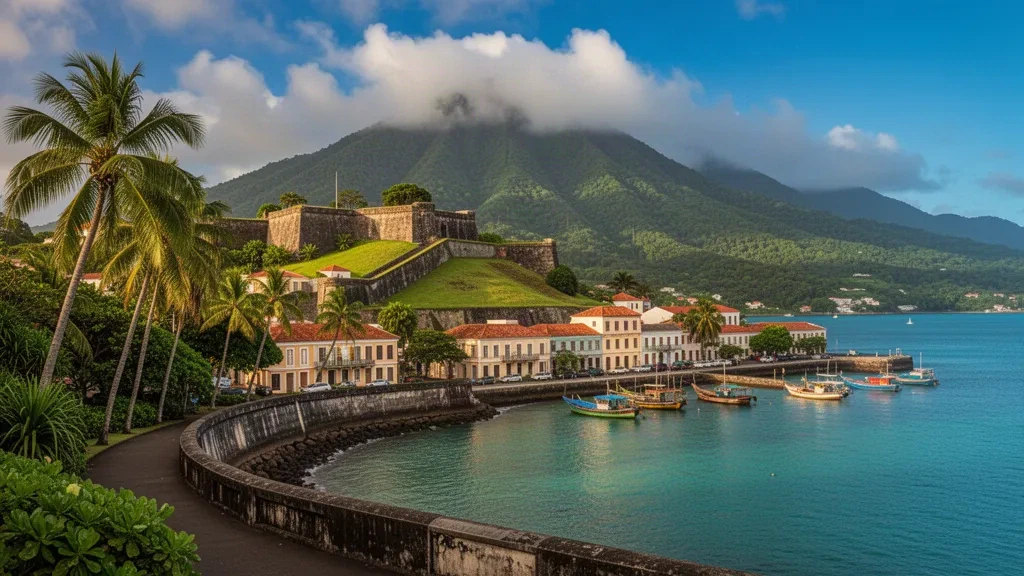
Basse-Terre is the administrative capital of Guadeloupe and a compact historic town on the southwestern coast of the island that shares its name. Set at the foot of the La Soufrière volcano, it feels quieter and more traditional than the commercial hub of Pointe-à-Pitre, with green mountains rising behind a small seafront.
Founded in the mid-17th century as one of the first French settlements in Guadeloupe, the town preserves an important past. Fort Delgrès, a 17th-century coastal fortification rebuilt over the centuries, overlooks the sea and recalls the resistance led by Louis Delgrès against the re-establishment of slavery. The 18th-century Cathedral of Our Lady of Guadeloupe and the neighbouring courthouse and Place du Champ d'Arbaud add to the historic centre.
Around the partially pedestrian Rue de la République, colourful facades shelter small shops, while the covered market draws morning visitors with spices, fruit, vegetables and local punch. The maritime station serves cruise ships and ferries to Les Saintes, and districts such as Bas-du-Bourg and Saint-François give the town a relaxed residential character.
Nature is central to the area. Basse-Terre lies close to the Guadeloupe National Park and the active La Soufrière volcano, whose trails lead through rainforest to panoramic views, while waterfalls, gardens and the hills of Saint-Claude are within easy reach.
As the prefecture of Guadeloupe, Basse-Terre is important for administration and local government, and its port, Creole restaurants and historic sites attract both cruise visitors and travellers exploring the greener, mountainous side of the archipelago.
Basse-Terre Travel Guide
Best Time to Visit
The dry season from December to April is the most pleasant time to visit Basse-Terre, with less rainfall and good conditions for hiking La Soufrière. The rainy season runs from June to November, when heavy showers and tropical storms are more likely.
How to Get Around
Basse-Terre's compact centre is easy to explore on foot, especially around the market and historic streets. For the volcano, the national park and other parts of the island, a rental car is the most practical option, with limited public buses and taxis also available.
Where to Stay
Accommodation in Basse-Terre itself is modest, with a small selection of hotels and guesthouses in and around the town centre. Nearby Saint-Claude and the hills above the coast offer quieter stays close to the volcano and national park.
Food & Drink
Local dining centres on Creole dishes such as accras, colombo and fresh seafood, often served in small restaurants around the centre. The covered market is the place to try tropical fruit, spices and local rum punch, with cafés and snack bars spread through town.
Ground Transportation Services in Basse-Terre
Airport Transfers
Travel between Pointe-à-Pitre International Airport and Basse-Terre by private car or taxi, a journey of roughly 60 kilometres across Guadeloupe.
Hourly Chauffeur
Book a private chauffeur by the hour for government meetings, sightseeing, hotel pickups and flexible travel around Basse-Terre and the island's west coast.
Car Rental
Rent a car in Basse-Terre for independent trips to La Soufrière, the Guadeloupe National Park, nearby beaches and other destinations on the island.
Bus & Group Transfers
Arrange minibuses or charter buses for cruise excursions, corporate groups, events and tours to Basse-Terre's landmarks and the surrounding national park.